From Screen Time Guilt to Family Connection: How Gaming Apps Transformed Our Everyday Moments
You know that nagging feeling when the kids are glued to their tablets, and you wonder, “Is this really quality time?” I used to feel the same—until we discovered gaming apps that didn’t steal our attention but actually brought us together. No flashy promises, just real moments: laughter during breakfast challenges, teamwork in after-school quests, even calming routines before bed. This isn’t about more screen time—it’s about better screen time. And it quietly reshaped how we connect every single day.
The Screen Time Struggle: When Technology Feels Like a Family Divisider
There was a time when I looked at screens as the enemy—something that pulled my kids into another world while I stood alone in the kitchen, trying to start a conversation that never landed. I’d hand over the tablet just to catch my breath, only to feel guilty seconds later. Was I giving in? Was I raising kids who’d rather tap than talk? I’d hide the device like it was contraband, only to pull it out again when the noise of the house became too much. But the guilt never left. What I didn’t realize then was that the problem wasn’t the screen itself—it was how we were using it. I was fighting the tool instead of learning how to use it well.
Then one evening, my daughter asked, “Can we play that word game together?” Not on separate devices. Not in silence. Together. And something shifted. That moment didn’t fix everything overnight, but it planted a seed. What if technology didn’t have to divide us? What if, with the right apps and the right mindset, it could actually bring us closer? I started to see screens not as a barrier but as a bridge—if we chose to cross it together. The real breakthrough wasn’t in deleting apps or setting stricter limits. It was in changing how I thought about screen time altogether. Instead of seeing it as lost time, I began to wonder: could this be time well spent?
That shift in perspective changed everything. I stopped asking, “How much screen time is too much?” and started asking, “What kind of screen time adds to our day?” It’s like the difference between mindlessly scrolling and reading a book with your child. One drains energy. The other builds connection. Once I reframed tech as a potential partner in family life—not a rival—I opened the door to something I never expected: shared joy, real engagement, and moments of togetherness I hadn’t felt in years.
Discovering Shared Play: The First Game That Got Us Laughing Together
It started with a simple word puzzle app—nothing flashy, no explosions or racing cars. Just letters on a screen and a timer ticking down. But it had a two-player mode. One rainy afternoon, my daughter looked up from her tablet and said, “Mom, want to play against me?” I almost said no—old habits die hard—but something made me sit down beside her. We took turns solving words, shouting out answers, groaning when the clock ran out. And then it happened: we both guessed the same word at the same time, and we burst into laughter. Not polite giggles. Full-on, tears-in-our-eyes, can’t-catch-our-breath laughter.
In that moment, we weren’t just sitting next to each other. We were in it together. Connected. Present. I realized that not all screen time is passive. Some of it can be active, joyful, even intimate. That game didn’t replace our time—it became part of it. We started playing every Sunday morning, turning it into a little ritual. Then my son wanted to join. Then we tried a drawing game where we took turns adding to a picture. “You drew a pineapple with legs!” he said, doubling over. “That’s not a pineapple—that’s a dancing fruit monster!” I shot back. The room filled with giggles again.
What surprised me most was how quickly these moments became anchors in our week. They weren’t grand outings or elaborate plans—just 10 minutes of shared play. But they mattered. Because for the first time in a long while, I wasn’t trying to get their attention away from the screen. I was right there with them, on the same side of the game. And that made all the difference. It taught me that not all games are isolating. Some are bridges. And once we found that bridge, we started looking for more ways to cross it—together.
Building Routines Around Play: How Gaming Fits Into Morning, Afternoon, and Night
We didn’t set out to turn gaming into a family habit. It just happened—naturally, gently, like a song you start humming without realizing. After that first word game, we began looking for other ways to weave short, shared play into our day. Not long sessions. Not hours lost to digital worlds. Just tiny pockets of connection, sprinkled through the rhythm of our lives.
Mornings used to be chaos—rushed breakfasts, forgotten homework, shoes missing. Now, we start with a quick math race app while eggs are frying. Two minutes. Just enough time to solve five problems together. “I beat you by one second!” my daughter cheers. “Best two out of three?” I counter. It’s silly, but it sets a light tone for the day. No yelling. No stress. Just us, solving problems side by side—literally.
After school, during the car ride home, we play a story-building game. One person starts a sentence, the next adds to it, and we keep going until we’ve created something ridiculous. “Once upon a time, there was a cat who opened a bakery…” “And all his cupcakes could fly.” “But they only flew on Tuesdays because that’s when the moon was made of cheese.” We laugh every time. The stories are absurd, but they keep us talking, listening, building something together. It turns what used to be silent screen time into a shared adventure.
And at night, before bed, we use a calming music-matching app. Soft tones, gentle colors, no timer. We take turns tapping the screen to complete a melody. It’s quiet, peaceful, a gentle wind-down from the day. My youngest, who used to resist bedtime, now asks, “Can we play our lullaby game?” These moments don’t take much time—five, maybe ten minutes—but they anchor our routines. The predictability gives my kids comfort. The shared joy gives me energy. Tech isn’t disrupting our rhythm anymore; it’s supporting it. And that’s a game-changer.
Choosing the Right Apps: What Makes a Game Family-Friendly and Meaningful
Not all gaming apps are created equal—especially when it comes to family play. Early on, we downloaded a few that looked fun but turned out to be minefields: flashing ads, pop-ups asking for money, games that encouraged competition in unhealthy ways. One app had my kids arguing within minutes. Another kept pushing in-app purchases with cheerful jingles that felt more manipulative than fun. We learned the hard way that not every “family-friendly” label means what it claims.
So we got pickier. We started looking for apps with co-op modes—games where we work together, not against each other. We avoided anything with ads or in-app purchases. No surprises. No pressure. Just clean, focused play. We also looked for games that encouraged talking, thinking, or creating. A puzzle app where we take turns? Yes. A drawing game where we build a scene together? Absolutely. A quiz game that asks silly questions like “Would you rather have wings or gills?”—perfect for sparking conversation.
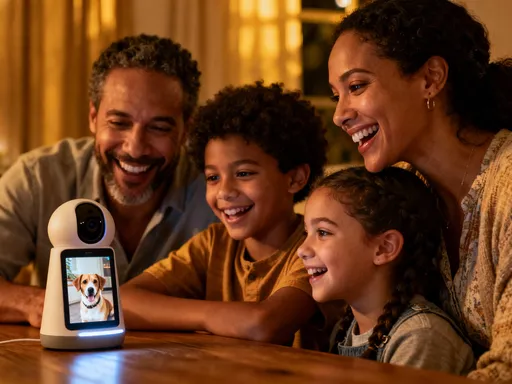
Simple features made a big difference. Pass-and-play games, where we take turns on one device, kept us close—literally and emotionally. Voice chat options in some apps let us play with grandparents over video calls, turning long-distance visits into shared adventures. We even found a gardening app where we “grow” a virtual plant together, watering it daily and watching it bloom. “Look, Grandma—it grew a flower!” my son shouted during a call. Her face lit up. “I helped too!” she said. Moments like that reminded us: the right app doesn’t just entertain. It connects.
We also paid attention to pacing. No endless levels. No pressure to keep playing “just one more round.” We wanted games that respected our time and energy. Short, self-contained sessions that ended on a high note. The goal wasn’t entertainment for entertainment’s sake, but connection with purpose. These small choices—what we downloaded, what we deleted, what we kept—added up to big changes in how we felt after playing. Calmer. Closer. Happier.
Turning Play Into Growth: Skills We Didn’t Know We Were Building
Here’s the thing I didn’t expect: while we thought we were just having fun, something deeper was happening. My son’s vocabulary grew from word games where we had to guess synonyms and antonyms. He started using words like “enormous” and “frustrated” in everyday conversation. “This backpack is enormous,” he said one morning. “It’s not enormous,” his sister replied. “It’s gigantic.” They were teasing, but they were also learning—without drills, without flashcards, without even realizing it.
My daughter, who used to give up quickly when things got hard, learned patience and strategy through turn-based puzzle games. She’d sit quietly, thinking through her moves. “I’m not stuck,” she’d say. “I’m just planning.” She was developing problem-solving skills, resilience, even emotional regulation—all wrapped in the fun of a game. Even I noticed changes. My focus improved. My reaction time got sharper. I used to zone out during multitasking. Now, I feel more present, more alert.
And it wasn’t just academic skills. We were building emotional intelligence too. Games that required teamwork taught us how to take turns, how to encourage each other, how to handle losing without melting down. “You almost had it!” I’d say after a close round. “Next time, we’ll win,” my son would reply, already smiling. We were learning to support each other, to celebrate effort, not just outcomes.
The apps didn’t teach directly. There were no lectures, no pop quizzes. But they created the conditions for learning to flourish—through play, through interaction, through shared challenges. It was organic. Natural. And because it felt like fun, not work, the lessons stuck. I didn’t set out to turn gaming into a learning tool. But I’m so glad it became one. Because now, when my kids ask to play, I don’t hear “Can I zone out?” I hear “Can we grow together?”
Navigating Challenges: Setting Boundaries Without Breaking the Fun
Of course, it hasn’t always been smooth. There were days when one of us wanted to keep playing long after the timer ended. “Just five more minutes!” my daughter would plead. “We’re about to beat the high score!” my son would argue. I’ve been there—wanting to finish a level, even when dinner is on the table. The pull of a good game is real. But we’ve learned that balance is part of the process.
We didn’t solve it with strict rules or power struggles. Instead, we focused on mutual respect and gentle cues. We use timers, but not the harsh beep of a kitchen alarm. We play a short song—“You Are My Sunshine” or “Three Little Birds”—and when it ends, that’s our signal. “Your turn ends when the song does,” I say. It’s softer, kinder, and surprisingly effective. Sometimes they groan, but they accept it. Because it’s not about control. It’s about fairness. Everyone gets a turn. Everyone gets to stop when they’re ready.
We also learned to read the room. If someone’s frustrated or overstimulated, we pause. We switch to a calmer game or step away altogether. “Let’s try again later,” I’ll say. “The game will still be there.” And it is. The key was making boundaries feel like part of the fun, not the end of it. They don’t kill the joy—they protect it. They keep play from turning into stress, connection from becoming conflict.
Another challenge was managing different ages and interests. My youngest loves colorful, simple games. My oldest wants more strategy, more challenge. We found a middle ground—games with adjustable difficulty or multiple modes. Some apps let us customize the experience so everyone feels included. We also take turns choosing the game. “It’s your turn to pick,” I’ll say. “Make it one we can all enjoy.” It teaches compromise. It teaches empathy. And it keeps everyone invested.
A New Normal: How Shared Gaming Quietly Strengthened Our Family Bond
Today, gaming is no longer something I dread. It’s a part of our family language. A shared level cleared. A silly character we both love. A joke from yesterday’s challenge that still makes us laugh at dinner. These small moments have built something lasting: trust, teamwork, and daily joy. It didn’t happen overnight. It took patience, trial and error, and a willingness to rethink what screen time could be.
What I love most is how natural it feels. We don’t schedule “family gaming time” like it’s a chore. It’s just woven into our days—like making pancakes on weekends or reading before bed. It’s not about winning or leveling up. It’s about being together. Laughing. Talking. Creating. And in a world that often pulls us in different directions, that’s priceless.
I used to worry that screens were stealing our connection. Now I see that, with the right apps and the right mindset, they can actually deepen it. Technology didn’t fix our family. We did. But it gave us a new way to show up for each other—one game at a time. We’re not perfect. Some days are still chaotic. Some games end in arguments. But more often than not, we end up closer.
So if you’re sitting there, watching your kids scroll in silence, feeling that familiar guilt—know this: you’re not alone. And you don’t have to choose between peace and presence. With a little intention, a little curiosity, you can turn screen time into shared time. Not more time. Better time. Time that matters. Because connection isn’t found in the absence of technology—it’s found in how we use it. And sometimes, the strongest bonds are built not in spite of the screen, but right there on it, one joyful tap at a time.