From Frustrated to Fluid: How Simple Video Editing Habits Transformed My Everyday Moments
Have you ever tried to edit a video and ended up feeling overwhelmed? I used to dread it—clips out of order, music too loud, hours lost with nothing to show. But what if editing wasn’t a chore, but a natural part of your day? I discovered that small, consistent habits turned my frustration into joy, helping me preserve memories, connect with loved ones, and even see my life more clearly. This is not about mastering complex tools—it’s about how a few gentle shifts made all the difference. And the best part? You don’t need a degree in tech or hours of free time. You just need to start where you are, with what you’ve got.
The Moment I Almost Gave Up on Video Editing
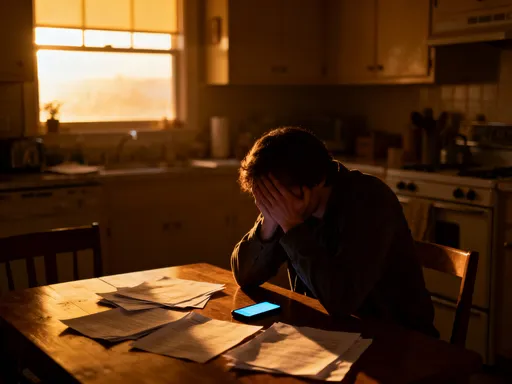
It was a rainy Sunday afternoon, and I had promised myself I’d finally put together the birthday video for my daughter. We’d gone to the park, she blew out candles on her cupcake, and my mom surprised us with a handmade card. It was all there—on my phone, in dozens of clips. But when I opened the editing app, my heart sank. The interface looked like a control panel from a spaceship. I dragged one clip into the timeline, then another, but they didn’t line up right. The audio from the park was too loud, and the music I picked drowned out her laughter. I tried to fix the color on a dark clip, but instead, I accidentally deleted half the sequence. Three hours later, I was no closer to a finished video. Just frustrated, tired, and honestly, a little guilty. I wanted to give her something beautiful, something she could keep forever. But I felt like I’d failed.
That night, I almost deleted the whole project. What was the point if I couldn’t do it right? I wasn’t a filmmaker. I didn’t have time to learn complicated software. And yet, I kept thinking about my mom’s face when she handed over that card. The way my daughter’s eyes lit up. Those moments mattered. They deserved to be more than scattered files in a folder labeled ‘Videos - 04.’ I realized then that the problem wasn’t my phone or the app. It wasn’t even my skill level. The real issue was my mindset. I was treating video editing like a big, scary project—something that had to be perfect or not done at all. But what if it didn’t have to be that way? What if I could just… start small?
Starting Small: The Power of One-Minute Edits
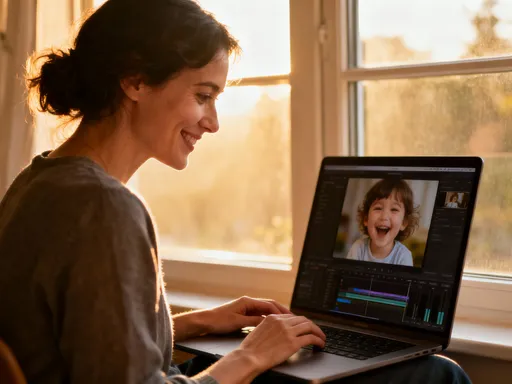
The next morning, I made a quiet promise to myself: no more three-hour marathons. No pressure. Instead, I would spend just one minute a day on editing. That’s it. Sixty seconds. I opened my phone while my coffee brewed and found the clip of my daughter blowing out the candle. I trimmed off the shaky part at the beginning and the long pause after. Just cleaned it up a little. And then I stopped. I didn’t add music. I didn’t adjust the brightness. I just saved it and went on with my day. But something shifted. That tiny action didn’t feel heavy. It felt doable. It felt like I was showing up—for her, for our memories, for myself.
Over the next week, I did the same thing. One minute. One clip. Sometimes I’d just label a video so I could find it later. Other times, I’d line up two clips in order. The magic wasn’t in the result—it was in the rhythm. I wasn’t fighting the process anymore. I was building trust with it. And with myself. I noticed that on days I did my one-minute edit, I felt calmer, more connected. It was like a tiny act of care, a quiet ‘I see you’ to the moments that made up my life. And slowly, without even trying, those clips started to come together. The birthday video? It wasn’t perfect. But it was real. And when I played it for my daughter, she didn’t critique the transitions. She just smiled and said, ‘I remember that day.’ That was all I needed.
Turning Routines into Creative Rituals
After a few weeks, something surprising happened: I started looking forward to editing. Not because I’d become a pro, but because it had become part of my day, like brushing my teeth or making the bed. I began pairing it with things I already did. While I waited for the kettle to boil, I’d open my phone and add a title to a clip. During my afternoon tea, I’d browse through my library and pick out a favorite moment from last weekend. I even started editing while dinner cooked, standing in the kitchen with my phone propped up, adding a soft filter to a sunset video from our walk.
It stopped feeling like a task and started feeling like a ritual—a quiet moment of reflection in the middle of a busy life. I wasn’t just organizing videos. I was re-living them. I noticed things I’d missed the first time: the way my son’s shoulders relaxed when he laughed, the way my dog tilted his head when I called his name. These weren’t just clips. They were little windows into the people I loved. And because I was doing it in small, natural moments, I never felt overwhelmed. It was like journaling, but with motion and sound. No pressure to write perfectly. Just showing up, one sentence at a time. One clip at a time. And over time, those little moments added up to something bigger—a living scrapbook of our life, created not in a single burst of effort, but in the gentle rhythm of daily care.
Tools That Disappear: Choosing Simplicity
One of the biggest turning points was realizing I didn’t need the most powerful app. I needed the one that got out of my way. At first, I was drawn to apps with all the bells and whistles—color grading, keyframes, 4K export. But they demanded attention. They made me feel like I had to ‘get it right.’ Then I switched to a simpler app, one that felt more like a helper than a teacher. It suggested music based on the mood of my video. It offered one-tap fixes for lighting and sound. It automatically backed up my clips to the cloud, so I didn’t have to worry about losing them.
The moment I stopped fighting the tool, everything changed. I didn’t have to remember where the trim button was. I didn’t have to export and re-upload every time I made a change. The app did the heavy lifting, so I could focus on what mattered—the feeling of the moment. That’s when I understood: the best technology doesn’t shout. It whispers. It supports, not dominates. It becomes invisible, like the air you breathe. And when the tool disappears, the emotion can step forward. I wasn’t thinking about transitions or effects anymore. I was thinking about my daughter’s voice, my husband’s smile, the way the light fell on the kitchen table that morning. The tech wasn’t the star. It was the stage. And that made all the difference.
Memories That Stick Because You Do
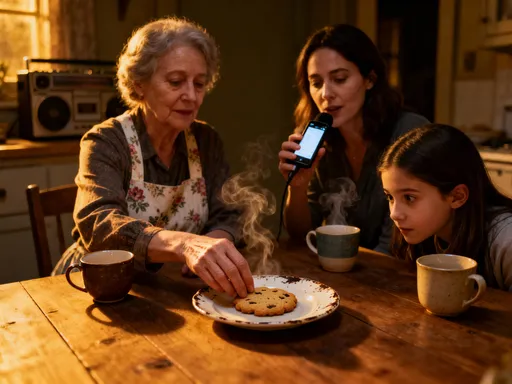
Here’s what I didn’t expect: the more I edited, the more I noticed. It’s like my eyes started tuning into the quiet moments—the ones that don’t make it into photos. I found a 12-second clip of my mom humming while she folded laundry. I’d forgotten she even did that. But there it was, on my screen, soft and familiar. I added it to a short video and sent it to her. She called me later, voice a little thick. ‘I didn’t know you remembered that,’ she said. ‘I haven’t heard myself hum like that in years.’
That moment hit me deep. I wasn’t just preserving memories. I was honoring them. And in doing so, I was deepening my connection to the people I love. I started watching old clips more often—not just to edit, but to remember. I saw how my son’s laugh had changed from a squeal to a full-throated chuckle. I noticed how my daughter started holding my hand a little tighter when we crossed the street. These weren’t dramatic shifts. They were subtle, beautiful, and easy to miss in the rush of daily life. But by taking the time to slow down and edit—even just a little—I was giving myself the gift of attention. And that attention became love in motion. It wasn’t about creating Hollywood films. It was about saying, ‘This moment mattered. I saw it. I remember.’ And that, more than any perfect video, is what lasts.
The Ripple Effect: Confidence Beyond the Screen
What started as a way to organize videos began to change other parts of my life. I noticed I was more patient—with my kids, with my work, with myself. I think it’s because I’d learned the power of small, consistent actions. If one minute a day could turn chaos into something meaningful, what else could I do with that same approach? I started applying it elsewhere. I began writing a few sentences in a journal each morning. I took five minutes to tidy one corner of the kitchen before bed. I even started a tiny garden on my windowsill, one seed at a time.
There was a quiet confidence growing in me—not loud or flashy, but steady. I wasn’t waiting for big motivation anymore. I knew I could start small and keep going. And that mindset shifted how I saw challenges. When something felt overwhelming, I’d ask myself, ‘What’s the one-minute version of this?’ Could I just open the file? Read one paragraph? Make one phone call? That question changed everything. I stopped avoiding things because they weren’t perfect. I started showing up, even when I didn’t feel like it. And over time, those small actions built momentum. I felt more in control, more capable, more like the person I wanted to be. The screen wasn’t just holding videos anymore. It was reflecting growth.
Building a Life, One Clip at a Time
Looking back, I see now that video editing was never really about the videos. It was about presence. It was about choosing to pay attention in a world that pulls us in ten directions at once. It was about saying, ‘This moment is worth keeping,’ even if no one else sees it. And it was about trusting that small, consistent care adds up to something beautiful—not because it’s perfect, but because it’s real.
If you’ve ever felt overwhelmed by technology, by the idea of capturing life ‘the right way,’ I want you to know this: you don’t have to do it all at once. You don’t need the fanciest app or the most time. You just need to start with one clip. One minute. One breath. Let the tool be simple. Let the moment be enough. And let yourself show up, imperfectly, consistently, with love. Because the truth is, your life is already full of moments worth keeping. They’re in the laughter, the quiet, the ordinary magic of daily life. And when you take the time to honor them—even in the smallest way—you’re not just making videos. You’re building a life. One clip at a time.